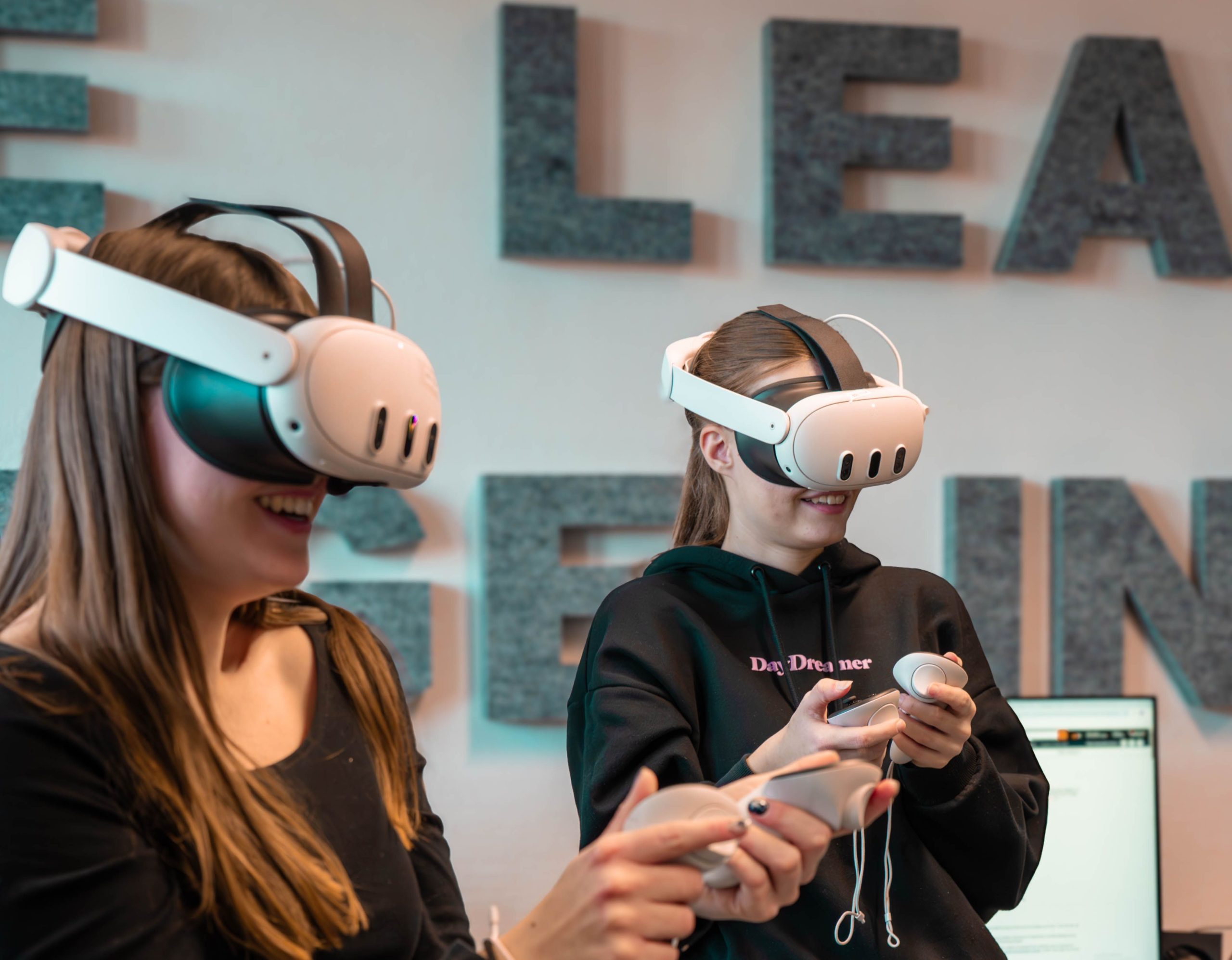
Denmark has quietly become one of Europe’s more interesting places to build a career in games and immersive tech. It doesn’t have the scale of the UK or Germany, but it punches well above its size: a small cluster of internationally respected studios, a strong design and animation education pipeline, and a growing appetite among traditional industries — healthcare, manufacturing, education — for AR and VR tools. For 2026, that combination is translating into steady, if not explosive, hiring, with competitive Nordic salaries and a job market that increasingly values people who can move between game engines and “serious” applied XR work.
Top industries hiring in 2026
Independent and mid-size game studios. Denmark’s game scene is built around a handful of well-known names — Playdead (Inside, Limbo), IO Interactive (Hitman), and a wider ecosystem of smaller Copenhagen- and Aarhus-based indie studios. These teams tend to hire lean, cross-functional groups: programmers, technical artists, and designers who can wear more than one hat. Roles here range from gameplay and engine programming to QA and production, often for candidates with 1–2 years of relevant education or hands-on project experience.
Enterprise software with a gaming layer. A large share of Denmark’s “game developer” job postings actually sit inside enterprise technology companies such as SimCorp, where game-engine skills (real-time rendering, simulation, 3D visualization) are repurposed for financial and industrial software. These roles pay closer to the enterprise-software scale than the indie-studio scale, and they’re a common entry point for developers who want stability alongside technical variety.
Applied AR/VR across non-gaming sectors. This is where Denmark’s XR growth is most visible. Hospitals and medtech firms use VR for surgical training simulations; manufacturers use AR for remote assistance and digital twins; universities and vocational schools use both for immersive teaching tools. Copenhagen in particular has a cluster of XR-focused startups and agencies serving these sectors, and demand for AR/VR engineers, XR designers, and 3D artists has grown as generative AI tools speed up asset production and let smaller teams take on more ambitious projects.
Design, animation, and creative agencies. Game-adjacent skills — 3D modeling, animation, UI/UX for interactive media — are also absorbed by creative and advertising agencies building AR filters, branded experiences, and interactive installations, which broadens the job market beyond studios and pure-play tech firms.
Salaries: what the numbers actually say
Salary data for Denmark’s games and XR sector is a little scattered — different sources sample different populations — but a consistent picture emerges once you line them up.
Game developers. Compensation surveys put the average gross game developer salary in Denmark at roughly 930,000 DKK a year (around 447 DKK/hour), plus an average bonus near 30,000 DKK. Entry-level developers (1–3 years of experience) average about 665,000 DKK, while senior developers (8+ years) average around 1,049,000 DKK. A separate estimate puts the typical monthly take-home closer to 34,600 DKK before tax, with entry-level pay starting near 215,000 DKK a year and top earners reaching roughly 633,000 DKK — a reminder that “average” figures vary significantly depending on the sample and whether they include senior specialists at multinational studios.
Game designers. Design-focused roles tend to sit a little lower. One salary survey puts the average at about 966,000 DKK a year, while Glassdoor’s crowd-sourced data — likely capturing more junior and freelance roles — shows a much lower median around 40,700 DKK a year, with a typical range of roughly 33,000–49,000 DKK. Video game designers specifically average around 32,900 DKK a month, with entry-level pay near 195,000 DKK a year and senior specialists reaching about 608,500 DKK.
AR/VR specialists. Dedicated Danish salary data for AR/VR developers is thinner, but the role commands a premium over standard game development globally — in the US, average AR/VR developer pay sits around $121,000 — and Danish employers report similar upward pressure. As demand for XR engineers, designers, and 3D artists grows alongside enterprise and healthcare adoption, these specialists are increasingly being paid closer to senior game-developer rates than junior-designer rates.
A note on the numbers. As with most tech salary data, roughly half of game developers and designers in Denmark report receiving some form of bonus, and pay varies considerably by city (Copenhagen leads), employer size, and specialization. Treat any single figure as a starting point for negotiation rather than a guarantee.
Skills in demand and the 2026 outlook
The skills that open doors in Denmark’s game and XR job market in 2026 look a lot like those anywhere else in Europe, with a few local emphases:
- Real-time engines — Unity and Unreal Engine remain the default toolset, valued as much by enterprise software companies repurposing game tech as by studios making games.
- 3D art and technical art — modeling, rigging, and optimization skills are in steady demand, increasingly paired with AI-assisted content pipelines that let small teams produce more.
- AR/VR-specific engineering — spatial computing, hand and eye tracking, and headset SDK experience (Meta Quest, Apple Vision Pro, HoloLens) are the clearest differentiators for XR-specific roles.
- Cross-disciplinary fluency — because so much of Denmark’s XR work happens inside non-gaming industries, developers who can talk to clinicians, engineers, or educators about their needs — not just build for other developers — have an edge.
- AI literacy — generative AI for asset creation, procedural content, and NPC behavior is reshaping workflows industry-wide, and Danish employers are no exception in rewarding developers who can work alongside these tools rather than around them.
The overall outlook for 2026 is one of steady, specialization-driven growth rather than a hiring boom. Denmark won’t rival the size of the UK, France, or Germany’s game industries, but its strength in applied XR — used by hospitals, manufacturers, and educators rather than only entertainment studios — gives the local market a resilience that pure entertainment-focused game industries sometimes lack during downturns.
Breaking into the market
For newcomers, Copenhagen is the obvious hub — home to most of the recognizable studios, XR startups, and the enterprise firms hiring game-engine talent — though Aarhus has a growing indie and creative-tech presence. A bachelor’s degree remains the most common baseline credential across design and development roles, but portfolios, game jams, and shipped projects carry real weight, especially at smaller studios.
Given Denmark’s applied-XR strength, candidates willing to look beyond pure entertainment studios — toward medtech, industrial, and edtech companies building AR/VR tools — will likely find a wider and more stable set of opportunities in 2026 than those chasing game-studio roles alone. Salaries reward specialization and seniority more than any single technology choice, so building deep expertise in one area — whether that’s gameplay programming, technical art, or XR interaction design — tends to pay off faster than staying a generalist.